How to write the prompt, what makes a story land, and 168 ideas by age, theme, holiday, and big moment. Every idea links to a page with more.
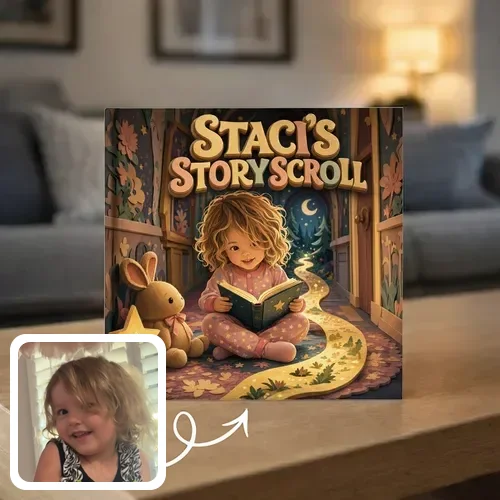
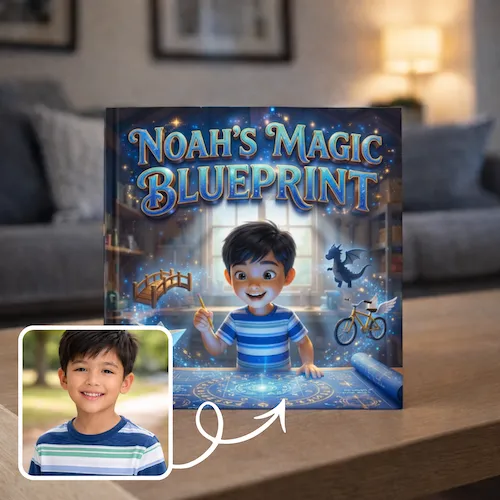
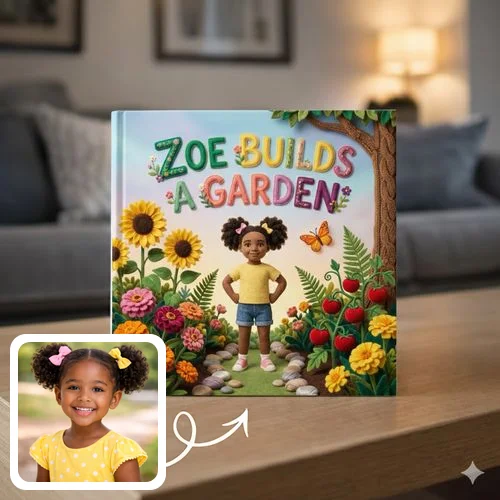
You do not write the book. Creating one has two parts: a character step, where you upload a photo of each person and give their name, age, and a line about them ("always carries a teddy bear"), and a story step, where you write a few sentences describing the adventure. The AI writes an original story around both. The character step handles who; the prompt handles what happens, so it does not need to re-introduce anyone.
The best prompts answer five questions: where does it happen, what is the one problem the hero has to solve, what real details should show up, what does each person do, and how should it feel. A prompt that answers all five almost always produces a book the kid asks for again. A prompt that says "an adventure" produces an adventure about a kid; the character step already told us who, so the prompt is where you say what they get up to.
Weak: "A story about Leo and dinosaurs." True, but the AI has to invent everything, so the result is a generic dinosaur book with your kid’s face in it.
Strong: "Leo wakes up in a prehistoric jungle with his stuffed triceratops, Spike, who has come to life. A baby Stegosaurus has lost its herd and Leo has to help it find them before dark, using the whistle he got for his birthday. Cozy and brave, not scary. Maya shows up at the end to help." Leo and Maya were set up in the character step with their photos and ages; every sentence here becomes a page.
Notice what the strong prompt does not do: it does not write dialogue, describe every scene, or plan the ending in detail. That is the AI’s job. Give it the bones and the real details, then review the pages and have it rewrite any that miss.
There are four reading levels: First Adventure (ages 1 to 3), I Can Read (4 to 6), Young Storyteller (7 to 10), and Keepsake Narrative (11 and up). The wizard suggests one from the ages you entered for the kids in the character step, and you can change it. The same prompt produces very different text at each level, so know which one you are writing for and shape the idea to it.
Toddlers and preschoolers want a familiar setting, one small problem, and themselves on every page: the park, the bath, the missing shoe. Early readers can handle a quest with steps and a friend who helps. Older kids want stakes, a twist, and jokes that are actually theirs. A reluctant reader wants the thing they are obsessed with right now, at a level slightly below their grade, so they finish it.
If you have no idea, the story step has a Surprise Me button that offers themes to start from. The ideas below are the longer version of that menu.
Length, control, real names, licensed characters, and what to do when it misses.
Upload a photo, type a few sentences, and we'll write and illustrate an original book with your child as the hero.
Start their bookTakes about 15 minutes · Preview before you pay